Monday, September 16, 2013

Lake Dendam Tak Sudah

Lake Dendam Tak Sudah - Bengkulu
Last updated: February 2nd 2017

This small lake is located within the Dendam Tak Sudah nature preserve around 8 km (5 miles) of the Bengkulu city center. Dendam Tak Sudah nature preserve covers an area of 5.8 sq km, at an altitude of 15 m. The lake is surrounded by views of both Bukit Barisan mountains and countryside. It is home for rare water orchid called “Vanda Hookeriana” which also known as pencil orchid, and other unique floras. When those plants are blooming, the lakesides would be more awesome views.
Refreshing & nutritious young coconut 

It is a good place to relax, the air is pleasantly cool. It is possible to ask a local fisherman for boating the surroundings of the lake. Also, don’t miss another pleasure, get some jagung bakar (roasted corn) and kelapa muda (young coconut), the fresh juice drunk straight from a young coconut, bought at roadside around the beach. Drink the water and then scoop out the flesh. So far, the lake has not been Bengkulu’s main attraction for foreign travelers.

Getting there
To get to the lake take a yellow, green or red angkot (public city transport) to Terminal Panorama for Rp. 4,000 (about US$ 0.30) then red one C3 to the lake Dendam. You should tell the driver where you’re going before get on. And you should have exact change for the fare (Rp. 4,000) regardless of the distance and anything the drivers may tell you.

Location: Jalan Danau, Dusun Besar, Bengkulu. Click here to find the location on Google Maps!
Cons: not enough parking space and inconvenient for independent travelers.

A good place to relax

Friday, June 28, 2013

Say No To Palm Oil

Poor orangutan - badly burned and  in a vulnerable state

   Say no to palm oil! Did you know that each and everyone of us is fueling one of the world’s biggest ecological disasters and acts of primate genocide in history? Please share the important info and take action!

Borneo and Sumatra are two of the most bio-diverse regions of the world, yet they have the longest list of endangered species. This list includes the magnificent orangutan. These two South-East Asian islands are extremely rich in life, containing around 20,000 flowering plant species, 3,000 tree species, 300,000 animal species and thousands more being discovered each year. Despite this amazing biodiversity and delicate web of species, an area the size of 300 football fields of rainforest is cleared each hour in Indonesia and Malaysia to make way for the production of one vegetable oil. That’s 6 football fields destroyed each minute. This vegetable oil is called palm oil, and is found in hundreds of the everyday products, from baked goods and confectionery, to cosmetics and cleaning agents… many of which you buy in your weekly shopping.

Due to the massive international demand for palm oil, palm oil plantations are rapidly replacing the rainforest habitat of the critically endangered orangutan; with over 90% of their habitat already destroyed in the last 20 years.

Orangutans are some of our closest relatives, sharing approximately 97% of their DNA with humans. Orangutan means ‘Person of the jungle’ in the Indonesian language. It is estimated that 6 to 12 of these ‘jungle people’ are killed each day for palm oil. These gentle creatures are either killed in the deforestation process, when they wonder into a palm oil plantation looking for food, or in the illegal pet trade after they’ve been captured and kept as pets in extremely poor conditions and provided with extremely poor nutrition.

Orangutans are considered as pests by the palm oil industry. In the deforestation process, workers are told that if wildlife gets in the way, they are to do whatever is necessary in order to dispose them, no matter how inhumane. Often orangutans are run over by logging machinery, beat to death, buried alive or set on fire… all in the name of palm oil.

Government data has shown that over 50,000 orangutans have already died as a result of deforestation due to palm oil in the last two decades. Experts say that if this pattern of destruction and exploitation continues, these intelligent acrobats of the jungle will be extinct in the wild within 3 to 12 years (as early as 2015). It is also thought that their jungle habitat will be completely gone within 20 years (approximately 2033).

Around 50 million tons of palm oil is produced annually; with almost all of that being non-sustainable palm oil, that replaces 12 million hectares of dense, bio-diverse rainforest. That’s the equivalent landmass of North Korea deforested each year for palm oil alone!

Palm oil is also having a shocking impact on our planet. The production of this one vegetable oil is not only responsible for polluting rivers and causing land erosion, but when the plantation workers set fire to the remaining trees, shrubs and debris to make way for the oil palms, it produces immense amount of smoke pollution that is toxic to planet earth. This has been found to be the second biggest contributor to greenhouse gas in the world.

By purchasing products that contain crude palm oil, you are helping destroy ancient, pristine rainforest, wipe out species like the orangutan, and create a large-scale ecological disaster. Think of the consequences next time you do your weekly shopping; the consequences not only for orangutans and other animals, but for us as the human race; for we cannot survive without the rainforests either. We have a choice, orangutans do not.

Source: http://touchthenature.com/say-no-to-palm-oil/

Sunday, June 23, 2013

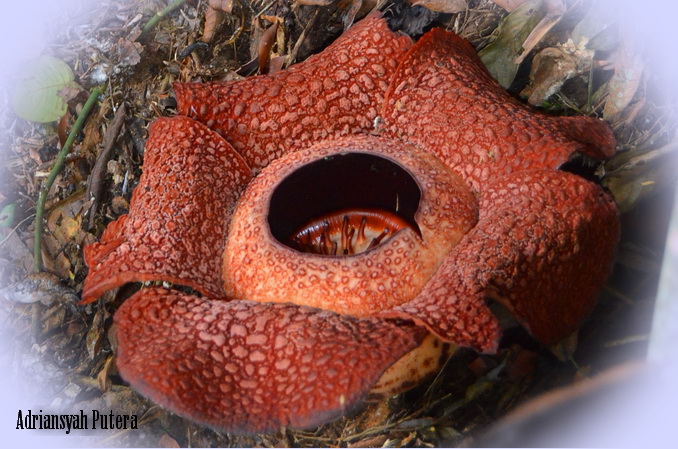
Bengkulu to establish biggest Rafflesia center in Asia

Rafflesia arnoldii
The Bengkulu Tourism and Culture Agency will establish a center to exhibit various types of its rare giant flower the Rafflesia. 

Bengkulu Tourism and Culture Agency head Hasanuddin said on Monday that the exhibition center would be built in two locations in Taba Penanjung, Central Bengkulu, and on Jl. Bencoolen in Tapak Paderi. The center would be established upon two hectares of land and expected to cost Rp 4.5 billion (US$468,018).

“We will propose the establishment of the center to the Tourism and Creative Economy Minister on Tuesday,” he said, adding that the center would be the biggest in Asia.

Tourists usually have to go to the Rindu Hati conservation forest in Kepahiang regency to hunt the foul-smelling flowers that bloom only once a year. The Rafflesia exhibition center is expected to make it easier for tourists who want see the flowers.

According to a researcher from Faculty of Agriculture at Bengkulu University Agus Susatya, there are 25 varieties of Rafflesia in the world, 11 of which can be found in the Sumatra rainforest including in Bengkulu.(cor)

A Rafflesia arnoldii in full bloom

Original source:
Nurni Sulaiman, The Jakarta Post, Bengkulu | Archipelago | Mon, December 10 2012
http://www.thejakartapost.com/news/2012/12/10/bengkulu-establish-biggest-rafflesia-center-asia.html

Photos by: Adriansyah Putera

Sunday, June 16, 2013

Bengkulu, Getting There and Away

Last updated: February 2nd 2017

Bengkulu, Getting There and Away

     The city of Bengkulu is easily accessible by land and air transportation. You can catch regular buses from Palembang, Padang, Bukittinggi, Pekanbaru, Bandung or Jakarta. At the time of writing, there are daily flights from Jakarta only which served by Lion Air and Sriwijaya Air.

Lion Air operates 3 times departure flights daily from Jakarta to Bengkulu (09:30, 13:30 & 17:15). Departure flight from Bengkulu to Jakarta (10:20, 15:00 & 18:20). You can book your flight through several convenient e-payment methods like online payment using your VISA or MasterCard, ATM payment that is only applicable in Indonesia at Bank Niaga, Lippo Bank, BII Bank, BNI Bank, Permata Bank, BRI Bank, Mandiri Bank, Panin Bank and Bank BCA, and Internet banking through Lippo Bank, Mandiri Bank, BNI Bank and Klik BCA. All you need is your Booking Code (PNR) and the Payment Code. 24/7 Information & reservation service at 0804-1-778899.
Call Center Numbers:
(+6280) 4177 8899
(+6221) 6379 8000
Customer Care
Phone: (+6221) 633 8345
SMS: (+6281) 9222 9999
Fax : (+6221) 633 5669
Email: customercare@lionair.co.id

Bus Companies to/from Bengkulu

SAN Travel services a wide range of destinations. Bengkulu - Jakarta (dep 08:30 executive class for Rp. 250,000). Bengkulu - Bukittinggi (dep 10:00 business class Rp. 135,000). Bengkulu - Padang (dep 12:00 executive class Rp. 150,000). Bengkulu - Pekanbaru (dep 11:00 executive class Rp. 165,000). Bengkulu - Bandung (dep 09:00 executive class Rp. 280,000). Bengkulu - Solo (dep 13:00 business class Rp. 325,000).

Headquarters: Jalan MT. Haryono 18, Bengkulu (next to Vista hotel)
Phone: (0736) 21811
Mobile: 085267982121
SAN Travel official representative in Jakarta: Jl. Perintis Kemerdekaan Pulo Mas Blok 12 No.10 phone (021) 4705502

Other optional long distance bus services: 
Putra Rafflesia (headquarters address Jalan MT Haryono 12; phone 0736-20313 and Jalan S. Parman No.19 Tanah Patah phone 0736-26162/24098) services a wide range of destinations: Bengkulu, Lampung, Palembang, Jakarta, Bandung. Tanjung Indah (headquarters Jalan MT Haryono 108 Bengkulu) runs minivans to Palembang and other destinations.

Public city transport in Bengkulu

Bengkulu Getting Around

    A counter at the airport offers rental cars and taxis rides for Rp. 60,000 into downtown. Alternatively, walk down to the road in front of the terminal building to the main road and turn to your right as you exit the airport and then take a white public city transport locally known as “angkot” (Rp. 3,000) to Terminal Panorama, then take another angkot either yellow or green angkot (Rp. 3,000) to the downtown. This alternative way is much cheaper than taking regular airport taxis.
  
Beware and don't get ripped off! The most fun way to get around Bengkulu is by angkot (public city transport). But the angkot drivers sometimes tend to overcharge westerners. To avoid this unacceptable overcharging, you should tell the driver where you’re going before get on. All rides cost Rp. 3,000 (updated Feb 2017) for one route regardless of the distance and anything the drivers may tell you. It is strongly recommended to have exact change for the fare. Give extra Rp. 10,000 to the driver if you bring a lot of luggage with you.

Hiring a car in Bengkulu
One of rental vehicle types in Bengkulu
    Hiring a car and driver is a convenient way to get around and its neighbor cities. Toyota Kijang (a type of 4WD) is a common type of rental vehicles. The hire of self-drive car is rarely available in Bengkulu especially for foreigners. It is more common and a better option to hire a car plus driver, which saves a lot of inconvenience. General rates for a 6-passanger-van start from Rp. 250,000 (about USD 25) up to Rp. 450,000 (about USD 45) per day, all rates exclude fuel and the driver’s meals. Vehicle types may vary depending on location. Car hire rates in Bengkulu are more expensive than rates in Java and Bali.

Happy travels!