Showing posts with label Central Bengkulu district. Show all posts

Tuesday, January 3, 2017

Tips for Traveling on Rainy Sumatra Days

Mount Kaba hike

You will encounter iffy weather if you visit Bengkulu province or other provinces of Sumatra during the rainy season. In Bengkulu province and its neighboring provinces including South Sumatra & Lampung province, the rains normally start from October to March (peaking in December - February) slightly later than the north parts of Sumatra. The weather is still hot and more humid in the coastal areas, but at higher elevations tend to be cooler.

Traveling in Bengkulu province during the rainy season especially within the wettest months December – February can be very challenging and inconvenient for most travelers. The December to February rains can come in sudden tropical downpours, and or it can also rain nonstop for a whole day. If you want to go backpacking to try a rainy season escape or a very adventurous trip that many travelers miss out on, perhaps in the rural or mountainous areas, it will require not only willpower but also preparation and a lot of patience. Make sure you carefully plan what to wear on a rainy day and bring the right gears. Here are some important tips from real travelers and my own experiences for traveling on rainy Sumatra days:

General rules: planning and preparation are half the battle. 
First identifying which regions you want to visit & stay, what you want to do and how long you want to travel before packing for your trip to Bengkulu province to get a greater understanding of what will be needed.

Suggested items to bring

Going rural
  • A light waterproof rain jacket (heavy plastic raincoat might be too warm to wear in the coastal areas).
  • Four of five t-shirts should be enough. The weather at higher elevations tend to be cooler, you can layer t-shirts for warmth instead of strictly winter clothes. You can buy extra t-shirts at low prices in many places in Sumatra if you need more, but if you are a big and tall person it will be very difficult to find plus size t-shirts. 
  • Two or three pairs of convertible long pants for backpacking, hiking or for any outdoor activity you may partake in. They can keep you warm when the temperature drops and can be turned into a stylish pair of shorts when the temperature bubbles up. 
  • An emergency kit. It can help with some unpleasant situations that arise while on the travel trail, especially if you plan on hiking or going rural. It can be adapted to your needs, type and length of travel, and destinations. The basic emergency kit should include at least the following items:
    1. First aid kit & enough medication for your entire stay. It is best to keep your medications in their original containers with clear labels, officials at ports of entry may require proper identification of medications.
    2. Ready-to-eat canned food and drinking water.
    3. Cellular phone.  We suggest you to bring a cellphone or buy a cheap cellphone and a local SIM card in Indonesia for your communication needs.
    4. Multipurpose utility tool like a Swiss army knife.
    5. A flashlight, the waterproof one is recommended. Power outages are frequent in Sumatra during thunder storms. 
➤ Don’t bury your emergency kit at the bottom of your travel bag. Keep it handy in case of an emergency.
  • Sturdy hiking boots for going rural or hiking.
  • Waterproof bags and zip lock bags (for use in protecting your camera equipment, electronic devices, travel documents, emergency kit, etc).
  • A folding umbrella.
  • Extra socks to wear while wearing shoes/hiking boots.
  • Sandals/flip flops.
  • An extra towel. It almost always comes in useful! 
  • Rainy season is also mosquito season, so don’t forget to bring mosquito repellent and anti malaria tablets especially if going rural.  Recommendations for suitable drugs to prevent malaria can be found at www.cdc.gov/malaria/travelers/drugs.html
  • Locks for your luggage, it’s better to be safe than sorry.
We greatly recommend that you go through a final checklist once you think you have got all items with you.

Packing
Don’t bury things you needs such as emergency kit, extra clothes, or drinking water at the bottom of your backpack or travel bag. If you are going to go backpacking, your backpack has to be balanced or you could fall over. Don’t make your pack too heavy at the top or bottom, it’s best to keep the heaviest items close to your back. Access and balance are the keys to packing well. 

That is all that we can write. Remember that a Sumatra escape or adventurous trip during the rainy season is only suitable for those who enjoy slow travel and don’t mind stopping for one or more days due to weather disruptions.

Tips for driving safely on rainy Sumatra days, click here!

Tuesday, December 27, 2016

Driving Safely on Rainy Sumatra Days

Rainy weather road trip
This article has been updated on October 6th, 2018

     If you’re planning to drive in Bengkulu province or other areas of Sumatra this rainy season there may be more needed than a full tank of fuel. Roads in much of Sumatra are not great and can be more difficult in the rainy season. Potholes, slippery and poorly visible roads are often the causes of many road accidents during the rainy season. We list some important tips to minimize accident risks for your rainy weather road trip.

Safety starts before you drive. Here's what you can do before you hit the road:
  • Give yourself extra time to check traffic, road and weather conditions before you go. It's also recommended to regularly check them for long distance driving. 
  • Check brakes, steering, and fluid levels. 
  • Make sure that headlights, turn signal lights, brake lights and windshield wipers are clean and functioning properly.
  • Check tread depth. Worn tires especially bald ones can be deadly on wet roads. It is widely accepted that tires should be replaced if the remaining tread depth is down to approx 1.6 mm (2/32 inch tread depth). This minimum tread depth standard is adopted by many of the world’s national transportation authorities. 
    Tire pressure label 
  • Check tire pressure, and also make sure that your spare tire is properly inflated. Many times people ignore their spare tire until they have a flat, and then find the spare tire is flat too. Keep in mind that many vehicles have different tire pressures on the front and rear axle. Recommended tire pressure is usually shown on a label attached to inside of the driver side door, doorpost, or glove box door. 
  • Prepare an emergency kit and keep it in the car, you never know when something's going to happen to you or your car. The basic emergency kit should include the following items:
    1.  First aid kit
    2.  Car tool kit
    3.  Food and drinking water.
    4.  Flashlight. Waterproof flashlight is recommended. 
    5.  Jumper cables. 
    6.  Multipurpose utility tool like a Swiss army knife.
    7.  Two reflective warning triangles

Safe Driving in the Rain
The Sumatra rainy season often brings heavy rain and often means flooded roads, a few rain drops can quickly develop into a heavy downpour. Here's what you can do to have a safe drive during the rains & thunderstorms:
  • Maintain safe following distance.  The 3-second rule needs to be increased to at least 5 seconds as wet roads can double stopping distances. 
  • Turn on your windshield wipers to keep your windshield clear. 
  • Rain can cause windshield and windows to fog up quickly. If your windshield and windows fog up, turn on the air conditioning and open the windows a little bit if necessary to increase the airflow. In a car without AC, a rag or piece of clothing will work as well, you'll just need to clear the windshield and the window more often. 
  • Turn on your headlights even in a light rain, or in gloomy, foggy conditions. They not only help you see the road but also help other drivers see you. 
  • Avoid excessive or sudden braking. It’s best to apply the brakes smoothly and gradually before coming to a complete stop. If you push the brake pedal to the limit, the car will probably skid. 
  • Don't follow large trucks or buses too closely, they tend to kick-up a lot of spray which can reduce your vision. Take care when passing them as well, if you must pass, do it quickly and safely.
  • Go slow when driving through a puddle of uncertain depth. If it is deeper than the bottom of your doors, turn around and find another route. Deep water can cause serious damage to a modern car's electrical system. 
  • When stuck in the mud, shift into 1st or 2nd gear and accelerate slowly. Don’t spin the wheels, or you could sink deeper.
  • When visibility is so limited that the edges of the road or other vehicles cannot be seen at a safe distance, it is time to pull over and wait for the rain to ease up. If the roadside is your only option, pull off as far as possible and wait until the storm passes.
Bengkulu - Kepahiang road condition

Flood Hazards
Many areas within Bengkulu province are considered to be at low to moderate risk of flooding. Floods can occur in Bengkulu province and the neighboring provinces as a result of heavy rainfall for a prolonged length of time. Take extra care when driving through these following areas which are prone to flooding:
  • Bengkulu city: Bentiring, Rawa Makmur, Semarang, Surabaya Permai, Tanjung Agung, and Tanjung Jaya.
  • Seluma district: Jenggalu, Cahaya Negeri, Air Periukan, Sukaraja, Seluma, Talo, and Semidang Alas Maras.
  • South Bengkulu district: Pasar Manna, Manna, and Ulu Manna.
  • Kaur district; Kaur Selatan (South Kaur), Nasal, Simidang Gumay, Tanjung Iman, Tetap, Luas and Maje.
  • Rejang Lebong district: Sindang Kelingi, Air Dingin, Bermani Ulu, Curup, Selupu Rejang, and Padang Ulak Tanding.
  • Kepahiang district: Bermani Ilir, Merigi, Ujan Mas, and Kepahiang.
  • Lebong district: Lebong Utara (North Lebong), Uram Jaya, and Pelabai.
  • Central Bengkulu district: Karang Tinggi, Taba Penanjung and Pondok Kelapa.
  • North Bengkulu district: Lais, Batik Nau, Ketahun, Air Besi, Putri Hijau and Marga Sakti.
  • Mukomuko district: Pulau Makmur, Ipuh, Arah Tiga, Lubuk Pinang.
Hope it helps and stay safe!!!


Photos by Adriansyah Putera

Friday, December 18, 2015

Bunga Terbesar Di Dunia - Rafflesia arnoldii

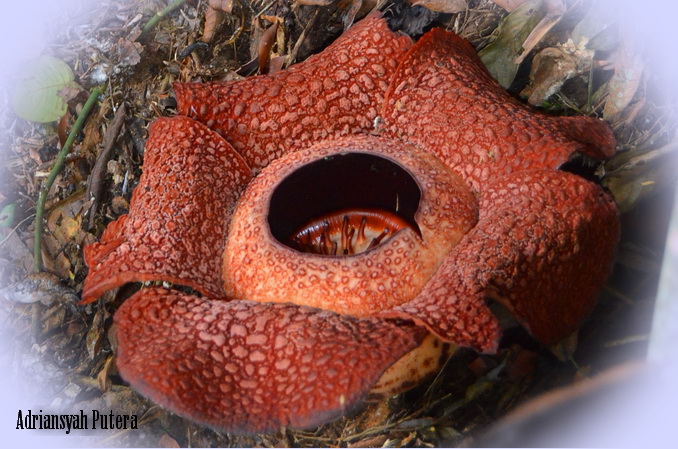
Rafflesia arnoldii, tumbuhan langka, parasit, tanpa akar dan tanpa daun
Click here for the English version of this post
Terakhir di-update 30 Maret 2018

Species yang terancam punah - Selamatkan Rafflesia !!!
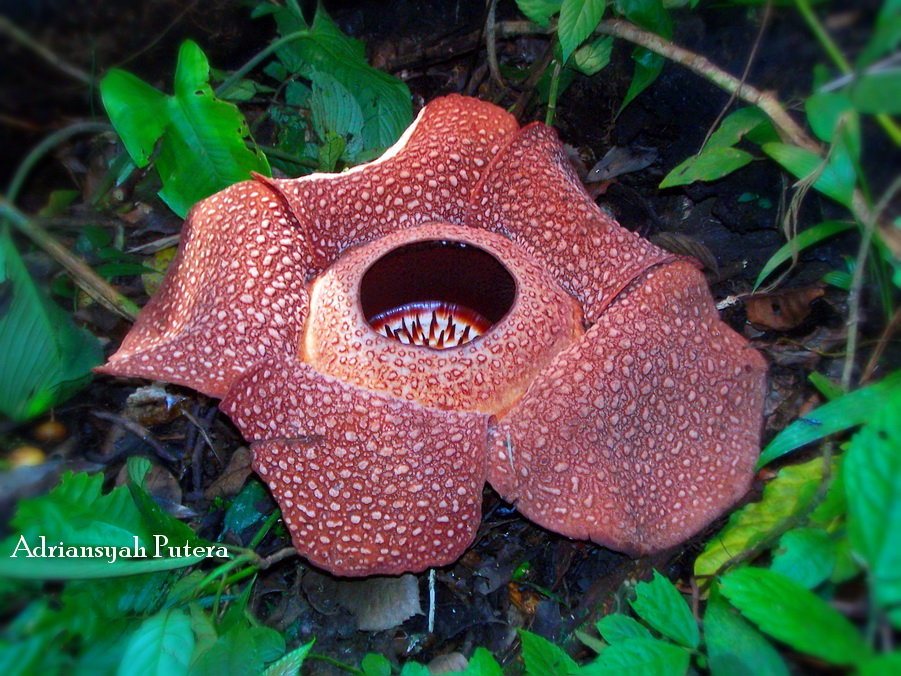
Hutan hujan tropis provinsi Bengkulu merupakan suaka baik bagi bunga terbesar di dunia – Rafflesia arnoldii, maupun bunga tertinggi di dunia, yang secara lokal dikenal sebagai bunga Kibut atau bunga Bangkai (nama ilmiahnya Amorphophallus Titanum). Ada sekitar 28 spesies bunga Rafflesia, dan Rafflesia arnoldii merupakan spesies yang terbesar. Bunga Rafflesia arnoldii dapat mencapai diameter hampir satu meter (3 kaki) dan dengan berat bunga hingga 11 kg (24 pon). Kelopaknya tumbuh hingga sepanjang 50 cm (20 inci) dan tebal 2,5 cm (1 inci). Karena kelangkaannya, Rafflesia arnoldii dianggap terancam punah. 

Rafflesia arnoldii yang secara lokal dikenal dengan sebutan “bunga Rafflesia” merupakan salah satu puspa yang dilindungi oleh hukum di Indonesia. Rafflesia arnoldii tumbuhan yang sangat langka dan unik karena tidak memiliki daun, batang atau akar dan bahkan tumbuhan ini tidak memiliki klorofil. Oleh karena itu tumbuhan ini harus hidup sebagai parasit yang menggunakan jaringan tumbuhan merambat Tetrastigma sebagai inangnya untuk mendapatkan nutrisi dan air. Rafflesia arnoldii bukan tumbuhan karnivora, tumbuhan ini sedikit berbau seperti daging busuk hanya untuk menarik perhatian serangga yang kemudian menyerbuki bunga lainnya. Tunas Rafflesia arnoldii butuh berbulan-bulan untuk tumbuh berkembang dan bunganya dapat tetap mekar hingga 14 hari. Rafflesia arnoldii biasanya dapat ditemukan selama musim hujan antara bulan Juni - Desember. Tumbuhan parasit yang sensitif ini tumbuh hanya sekali setahun di hutan hujan tropis primer yang belum terganggu.

Tunas Rafflesia arnoldii perlu berbulan-bulan untuk berkembang
Informasi Sejarah
Rafflesia arnoldii ditemukan oleh Letnan Inggris bernama Sir Thomas Stamford Bingley Raffles yang telah ditunjuk untuk menjabat posisi Gubernur British Bencoolen (saat ini dikenal sebagai Bengkulu) dan ahli botani Inggris Dr. Joseph Arnold ketika mereka tiba di Lubuk Tapi - Bengkulu Selatan pada bulan Mei 1818. Nama kedua orang tersebut - Raffles dan Arnold – kemudian digunakan untuk memberikan nama botani atau ilmiah untuk tumbuhan tersebut. Rafflesia arnoldii sekarang menjadi simbol resmi provinsi Bengkulu.

Lokasi:
Rafflesia arnoldii, bunga terbesar di dunia dapat ditemukan di banyak kawasan dalam hutan Provinsi Bengkulu, biasanya di Kecamatan Taba Penanjung - Kabupaten Bengkulu Tengah (45 km atau 28 mil dari kota Bengkulu) dan di Tebat Monok Kabupaten Kepahiang, di lereng Pegunungan Bukit Barisan yang paling mudah dicapai karena dekat dengan jalan lintas di pertengahan antara kota Bengkulu dan kota Curup. Rafflesia arnoldii juga dapat ditemukan di beberapa lokasi lainnya di provinsi Bengkulu yaitu:
  • Pagar Gunung – Kabupaten Kepahiang.
  • Talang Ulu, pemandian air panas Suban, dan Taba Rena – Kabupaten Rejang Lebong.
  • dan desa Lubuk Tapi, Kabupaten Bengkulu Selatan.

Rafflesia arnoldii raksasa yang langka
Informasi Spesies:
Nama lengkap: Rafflesia arnoldii R.Br.
Kerajaan: Plantae
Divisi: Magnoliophyta
Kelas: Magnoliopsida
Ordo: Malpighiales
Famili: Rafflesiaceae
Genus: Rafflesia


Jika Anda ingin menggunakan foto-foto dari blog ini, silahkan email ke kurt_reyhans@yahoo.com

Lokasi pengambilan foto di Taba Penanjung dan Tebat Monok, Provinsi Bengkulu. 
Foto oleh Peter Kimball, Jeff Clairmont, dan Adriansyah Putera.


Anda mungkin tertarik untuk membaca:


Ekstra foto Rafflesia arnoldii
Anda butuh keberuntungan untuk melihat Rafflesia yang sangat langka
Bunga terbesar di dunia - Rafflesia arnoldii
Setelah beberapa hari mekar secarah penuh, bunga unik ini mulai membusuk
Tanpa akar dan daun, bagian yang terlihat hanya bunga


Bunga rimba yang eksotis - Rafflesia arnoldii
Kontak: kurt_reyhans@yahoo.com

Sunday, June 23, 2013

Bengkulu to establish biggest Rafflesia center in Asia

Rafflesia arnoldii
The Bengkulu Tourism and Culture Agency will establish a center to exhibit various types of its rare giant flower the Rafflesia. 

Bengkulu Tourism and Culture Agency head Hasanuddin said on Monday that the exhibition center would be built in two locations in Taba Penanjung, Central Bengkulu, and on Jl. Bencoolen in Tapak Paderi. The center would be established upon two hectares of land and expected to cost Rp 4.5 billion (US$468,018).

“We will propose the establishment of the center to the Tourism and Creative Economy Minister on Tuesday,” he said, adding that the center would be the biggest in Asia.

Tourists usually have to go to the Rindu Hati conservation forest in Kepahiang regency to hunt the foul-smelling flowers that bloom only once a year. The Rafflesia exhibition center is expected to make it easier for tourists who want see the flowers.

According to a researcher from Faculty of Agriculture at Bengkulu University Agus Susatya, there are 25 varieties of Rafflesia in the world, 11 of which can be found in the Sumatra rainforest including in Bengkulu.(cor)

A Rafflesia arnoldii in full bloom

Original source:
Nurni Sulaiman, The Jakarta Post, Bengkulu | Archipelago | Mon, December 10 2012
http://www.thejakartapost.com/news/2012/12/10/bengkulu-establish-biggest-rafflesia-center-asia.html

Photos by: Adriansyah Putera

Saturday, June 1, 2013

Natural Beauty of Bukit Daun

Bukit Daun at sunset
Last updated: January 21st 2017

Seeing Rafflesia arnoldii
       Another area of awesome natural beauty in Bengkulu province, Bukit Daun is a nature conservation surrounded by mountains on all sides and rich with traditional Rejang culture. It is home to endangered species such as, honey bear, Rafflesia arnoldii, the world’s largest flower, and Amorphophallus titanium (locally known as bunga Kibut), the world’s tallest flower. Many kinds of orchid could be found here, too. It is at 800-900 m above sea level, the best way to explore the village is on foot. The air is cool and clean, and the locals are hospitable.

Besides natural beauty, Bukit Daun also offers some great do-it-yourself trekking opportunities where you can explore the fresh and clean outdoors and meet hospitable locals, and stunning sunrises. There is a small Japanese WWII bunker which is constructed of rebar-enforced cement and stone in Bukit Daun. You could also day-trip here for some hiking through forests/coffee plantations and a local lunch. There aren’t any real restaurants in Bukit Daun and most visitors end up having meals and drinks in warung (simple food stall). Basic supplies are available in local shops.

Getting there:
Bukit Daun nature conservation is about 48 km (30 miles) from the city of Bengkulu and can be reached on day trips from Bengkulu, Curup or Kepahiang. Simply take a public transport (Rp. 10,000) to Tebat Monok from Terminal Nakau in Bengkulu or rent a Kijang. 

More photos

The bloom of Rafflesia arnoldii in Bukit Daun nature conservation

Fun hiking through Bukit Daun forest
Japanese WWII bunker
Foggy scenery of Bukit Daun

Photos by Adriansyah Putera and Shirley Utama Adriansyah

Saturday, March 23, 2013

The World's Largest Flower - Rafflesia Arnoldii

Rafflesia, a rare, parasitic, rootless and leafless plant  
Last updated March 30th, 2018

Critically endangered species - Save Rafflesia !!!
The tropical rainforests of Bengkulu province are home to both the world's largest flower- the Rafflesia arnoldii, and the world's tallest flower, known locally as Kibut or bunga Bangkai (its scientific name is Amorphophallus Titanum). There are approximately 28 species of Rafflesia flowers with the Rafflesia arnoldii being the largest. Its flower can attain a diameter of nearly a meter (3 ft) and the flower can weigh up to 11 kg (24 lb). Its petals grow to 50 cm long (20 inches) and 2.5 cm thick (1 inch). Due to its rarity, the Rafflesia arnoldii is considered endangered. 

Klik di sini untuk versi bahasa Indonesia 

The Rafflesia arnoldii which is known locally as "bunga Rafflesia" is one of the plants protected by law in Indonesia. It is a very rare and a unique plant producing no leaves, stems or roots and it does not even have chlorophyll. Because of this the plant must live as a parasite using the Tetrastigma vine as its host to obtain its nutrients and water. Rafflesia arnodii is not a carnivorous plant, it smells a little of rotting flesh only to attract insects which then pollinate other flowers. The buds of the Rafflesia arnoldii take many months to develop and the flower stays in bloom up to 14 days. Rafflesia arnoldii typically can be seen during wet season between June - December. This sensitive parasitic plant grows only once a year in primary undisturbed rainforest. 


The bud of Rafflesia takes many months to develop
Historical Information
The Rafflesia arnoldii was discovered by a British Lieutenant named Sir Thomas Stamford Bingley Raffles who had been appointed the Governor of British Bencoolen (currently known as Bengkulu) and the British botanist Dr. Joseph Arnold when they arrived in Lubuk Tapi – South Bengkulu in May of 1818. The names of the two men - Raffles and Arnold - were used to give the plant its botanical or scientific name. Rafflesia arnoldii is now the official symbol of Bengkulu province.

Directions:
The Rafflesia arnoldii, the world's largest flower can be found in many areas in the jungles of Bengkulu province - Indonesia, normally in Taba Penanjung – Central Bengkulu District (45 km or 28 miles from the city of Bengkulu) and in Tebat Monok Kepahiang District, on the slopes of the Bukit Barisan Mountains, the most accessible being close to the main road halfway between Bengkulu city and the town of Curup. Rafflesia arnoldii may also be found in several other locations in Bengkulu province including:
  • Pagar Gunung - Kepahiang District
  • Talang Ulu, Suban hot spring, and Taba Rena - Rejang Lebong District
  • and Lubuk Tapi, South Bengkulu District
Rare giant Rafflesia arnodii

Species information:
Full name: Rafflesia arnoldii R.Br.
Kingdom: Plantae
Division: Magnoliophyta
Class: Magnoliopsida
Order: Malpighiales
Family: Rafflesiaceae
Genus: Rafflesia


Let’s help each other!
Let’s make this post available in various languages! Translating this post can help more readers in your language to understand this post. If you would like to translate this post into your language or if you need help to translate some of your posts into Indonesian, and or if you want to use photos from this blog please send me an email to kurt_reyhans@yahoo.com


More Photos
You need luck to see the very rare Rafflesia 
The world's largest flower - Rafflesia arnoldii
An exotic jungle flower - Rafflesia arnoldii


After a few days of full bloom, this unique flower begins to rot
Without roots and leaves, the only visible parts are the flowers

Photographed in Taba Penanjung and Tebat Monok, Bengkulu Province
Photos by Peter Kimball, Jeff Clairmont, and Adriansyah Putera
Contact: kurt_reyhans@yahoo.com