Friday, October 4, 2013

Kepahiang, an Ocean of Green Topography

Lapangan Santoso - Kepahiang
Last updated: February 2nd 2017

Kepahiang, a cool relaxed district, with its capital of the same name under Hidayattullah Sjahid administration. It covers an area of 665 sq km (257 sq mi) and has a population of 125,011 people, about 183 people per sq km, and 97% of Kepahiang people are Moslems (population census 2010). Time zone: Western Indonesia Time (UTC+7). Bukit Barisan mountain range is Kepahiang’s backbone which runs most of the length of Kepahiang territory. Most people of Kepahiang who live in the shadow of Bukit Barisan mountain range are farmers and traders. There are some fine examples of traditional Rejang Kepahiang architecture in the villages around Kepahiang. Most of the houses are more than 50 years old, most are in good condition.

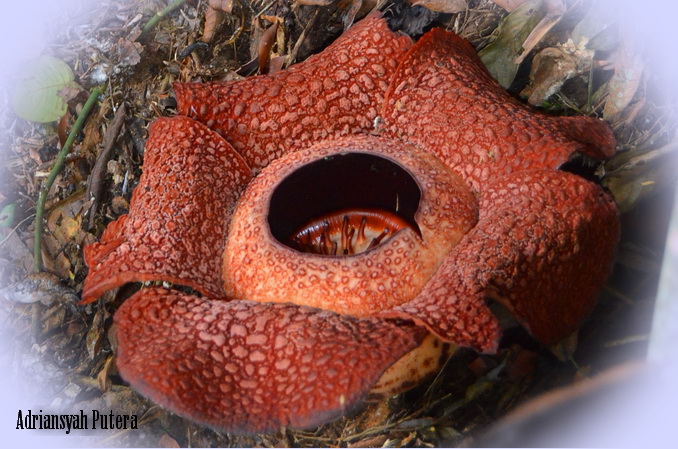
Kepahiang has an ocean of green topography that dominates every extensive view, and fills the land of Rejang Kepahiang with marvelous flora and fauna. Rafflesia arnoldii, the largest flower on the planet, and Amorphophallus titanium (locally known as Kibut) the tallest flower on the planet, can be found in some parts of nature conservation in Kepahiang district. Thick rain forests host many kinds of birds and monkeys that swing in the tree tops. It is great to walk around the fertile rice paddies in the green countryside around Kepahiang. Don’t miss lake Suro, Kabawetan tea plantation and hill resort which offer panoramic views and scenic walks. Many of tourist attractions in Kepahiang are off the beaten track, but while they will take some extra time to get to, they are well worth searching out.
Kepahiang also offers awesome jungle treks

Please come prepared! In Kepahiang, the rainy season usually falls between October and April. Rain tends to come in sudden tropical downpours, but it can also rain nonstop for a whole day (peaking from January to February).

Kepahiang can be reached by numerous connections to/from Bengkulu (Rp. 25,000), Curup, Lubuk Linggau and Palembang.

LOCAL TRANSPORT
Becak
The common Indonesian means of transport such as angkot (public city transport), ojek (motorcycle riders who take passengers), and becak (pedicab) are available in many places in Kepahiang. Most angkots serve a standard route, picking up and dropping off people anywhere along the route, angkot fare starts from Rp. 4,000 per person (applied April 2016). You can find ojeks at the Kepahiang market or around the crossroads. An ojek can take you around the town, or can take you where no other public transport exists. The base rate for an ojek is Rp. 4,000 per person for a short distance. Becaks (pedicab) serve a short distance only and they can be found at around the back streets, becak fare is Rp. 3,000 – Rp.6,000.

Beware local transport rip off. One of the most common ways of getting ripped off involves taking local transportation. To avoid getting ripped off by angkot drivers or ojek guys, it is wise to ask someone such as your hotel employee or the locals, about the normal fare before you get on any local transport, otherwise see how much the other passengers pay and offer the exact fare.


Packing Tips For Your Kepahiang Hiking Trip (Rainy season Oct - Apr) 
  • Luggage and bags: Locks for your luggage to protect your important item & travel documents from theft. It’s better to be safe than sorry. 
  • Clothing/Shoes/Weather Gear: In most part of Sumatra, the wet season falls from October to April, the wettest months are January and February that can make travel more difficult. The weather is still hot and more humid in the coastal areas, but at higher elevations tend to be cooler. On January to February rains can come in sudden tropical downpours, and or it can also rain nonstop for a whole day. Bring plenty of socks to wear while wearing shoes, folding umbrella, a light waterproof rain jacket (heavy plastic raincoat might be too warm for the humid tropics), long pants and/or jeans, shorts, T-shirts, flip flops.
  • Toiletries and Medical Supplies: First Aid Kit, anti Malarial tablets, analgesic pills, Antihistamine pills for any allergic reactions, toothpaste, toothbrush, toilet paper for the eventual emergency, and anti-bacterial gel for use afterwards.
  • Photo Equipment: Bring extra batteries and SD cards, in case you go someplace where you can’t buy replacement stocks. Zip locks bags for use in protecting your camera equipment, travel documents, etc. It’s good to bring a transformer or adapter if your devices don’t play nice with the local electricity.
  • Camping/Outdoor Gear: Flashlight, mosquito repellent, pack at least two bottles of water per day.

Related posts:

More photos from Kepahiang: 


Lake Suro at sunset
Seeing Rafflesia arnoldii
Fresh fruit stalls in Tebat Monok - Kepahiang
Amorphophallus titanium (locally known as Kibut) the tallest flower on the planet

Photos by: Adriansyah Putera, Shirley Adriansyah


Monday, September 16, 2013

Lake Dendam Tak Sudah

Lake Dendam Tak Sudah - Bengkulu
Last updated: February 2nd 2017

This small lake is located within the Dendam Tak Sudah nature preserve around 8 km (5 miles) of the Bengkulu city center. Dendam Tak Sudah nature preserve covers an area of 5.8 sq km, at an altitude of 15 m. The lake is surrounded by views of both Bukit Barisan mountains and countryside. It is home for rare water orchid called “Vanda Hookeriana” which also known as pencil orchid, and other unique floras. When those plants are blooming, the lakesides would be more awesome views.
Refreshing & nutritious young coconut 

It is a good place to relax, the air is pleasantly cool. It is possible to ask a local fisherman for boating the surroundings of the lake. Also, don’t miss another pleasure, get some jagung bakar (roasted corn) and kelapa muda (young coconut), the fresh juice drunk straight from a young coconut, bought at roadside around the beach. Drink the water and then scoop out the flesh. So far, the lake has not been Bengkulu’s main attraction for foreign travelers.

Getting there
To get to the lake take a yellow, green or red angkot (public city transport) to Terminal Panorama for Rp. 4,000 (about US$ 0.30) then red one C3 to the lake Dendam. You should tell the driver where you’re going before get on. And you should have exact change for the fare (Rp. 4,000) regardless of the distance and anything the drivers may tell you.

Location: Jalan Danau, Dusun Besar, Bengkulu. Click here to find the location on Google Maps!
Cons: not enough parking space and inconvenient for independent travelers.

A good place to relax

Friday, June 28, 2013

Say No To Palm Oil

Poor orangutan - badly burned and  in a vulnerable state

   Say no to palm oil! Did you know that each and everyone of us is fueling one of the world’s biggest ecological disasters and acts of primate genocide in history? Please share the important info and take action!

Borneo and Sumatra are two of the most bio-diverse regions of the world, yet they have the longest list of endangered species. This list includes the magnificent orangutan. These two South-East Asian islands are extremely rich in life, containing around 20,000 flowering plant species, 3,000 tree species, 300,000 animal species and thousands more being discovered each year. Despite this amazing biodiversity and delicate web of species, an area the size of 300 football fields of rainforest is cleared each hour in Indonesia and Malaysia to make way for the production of one vegetable oil. That’s 6 football fields destroyed each minute. This vegetable oil is called palm oil, and is found in hundreds of the everyday products, from baked goods and confectionery, to cosmetics and cleaning agents… many of which you buy in your weekly shopping.

Due to the massive international demand for palm oil, palm oil plantations are rapidly replacing the rainforest habitat of the critically endangered orangutan; with over 90% of their habitat already destroyed in the last 20 years.

Orangutans are some of our closest relatives, sharing approximately 97% of their DNA with humans. Orangutan means ‘Person of the jungle’ in the Indonesian language. It is estimated that 6 to 12 of these ‘jungle people’ are killed each day for palm oil. These gentle creatures are either killed in the deforestation process, when they wonder into a palm oil plantation looking for food, or in the illegal pet trade after they’ve been captured and kept as pets in extremely poor conditions and provided with extremely poor nutrition.

Orangutans are considered as pests by the palm oil industry. In the deforestation process, workers are told that if wildlife gets in the way, they are to do whatever is necessary in order to dispose them, no matter how inhumane. Often orangutans are run over by logging machinery, beat to death, buried alive or set on fire… all in the name of palm oil.

Government data has shown that over 50,000 orangutans have already died as a result of deforestation due to palm oil in the last two decades. Experts say that if this pattern of destruction and exploitation continues, these intelligent acrobats of the jungle will be extinct in the wild within 3 to 12 years (as early as 2015). It is also thought that their jungle habitat will be completely gone within 20 years (approximately 2033).

Around 50 million tons of palm oil is produced annually; with almost all of that being non-sustainable palm oil, that replaces 12 million hectares of dense, bio-diverse rainforest. That’s the equivalent landmass of North Korea deforested each year for palm oil alone!

Palm oil is also having a shocking impact on our planet. The production of this one vegetable oil is not only responsible for polluting rivers and causing land erosion, but when the plantation workers set fire to the remaining trees, shrubs and debris to make way for the oil palms, it produces immense amount of smoke pollution that is toxic to planet earth. This has been found to be the second biggest contributor to greenhouse gas in the world.

By purchasing products that contain crude palm oil, you are helping destroy ancient, pristine rainforest, wipe out species like the orangutan, and create a large-scale ecological disaster. Think of the consequences next time you do your weekly shopping; the consequences not only for orangutans and other animals, but for us as the human race; for we cannot survive without the rainforests either. We have a choice, orangutans do not.

Source: http://touchthenature.com/say-no-to-palm-oil/

Sunday, June 23, 2013

Bengkulu to establish biggest Rafflesia center in Asia

Rafflesia arnoldii
The Bengkulu Tourism and Culture Agency will establish a center to exhibit various types of its rare giant flower the Rafflesia. 

Bengkulu Tourism and Culture Agency head Hasanuddin said on Monday that the exhibition center would be built in two locations in Taba Penanjung, Central Bengkulu, and on Jl. Bencoolen in Tapak Paderi. The center would be established upon two hectares of land and expected to cost Rp 4.5 billion (US$468,018).

“We will propose the establishment of the center to the Tourism and Creative Economy Minister on Tuesday,” he said, adding that the center would be the biggest in Asia.

Tourists usually have to go to the Rindu Hati conservation forest in Kepahiang regency to hunt the foul-smelling flowers that bloom only once a year. The Rafflesia exhibition center is expected to make it easier for tourists who want see the flowers.

According to a researcher from Faculty of Agriculture at Bengkulu University Agus Susatya, there are 25 varieties of Rafflesia in the world, 11 of which can be found in the Sumatra rainforest including in Bengkulu.(cor)

A Rafflesia arnoldii in full bloom

Original source:
Nurni Sulaiman, The Jakarta Post, Bengkulu | Archipelago | Mon, December 10 2012
http://www.thejakartapost.com/news/2012/12/10/bengkulu-establish-biggest-rafflesia-center-asia.html

Photos by: Adriansyah Putera